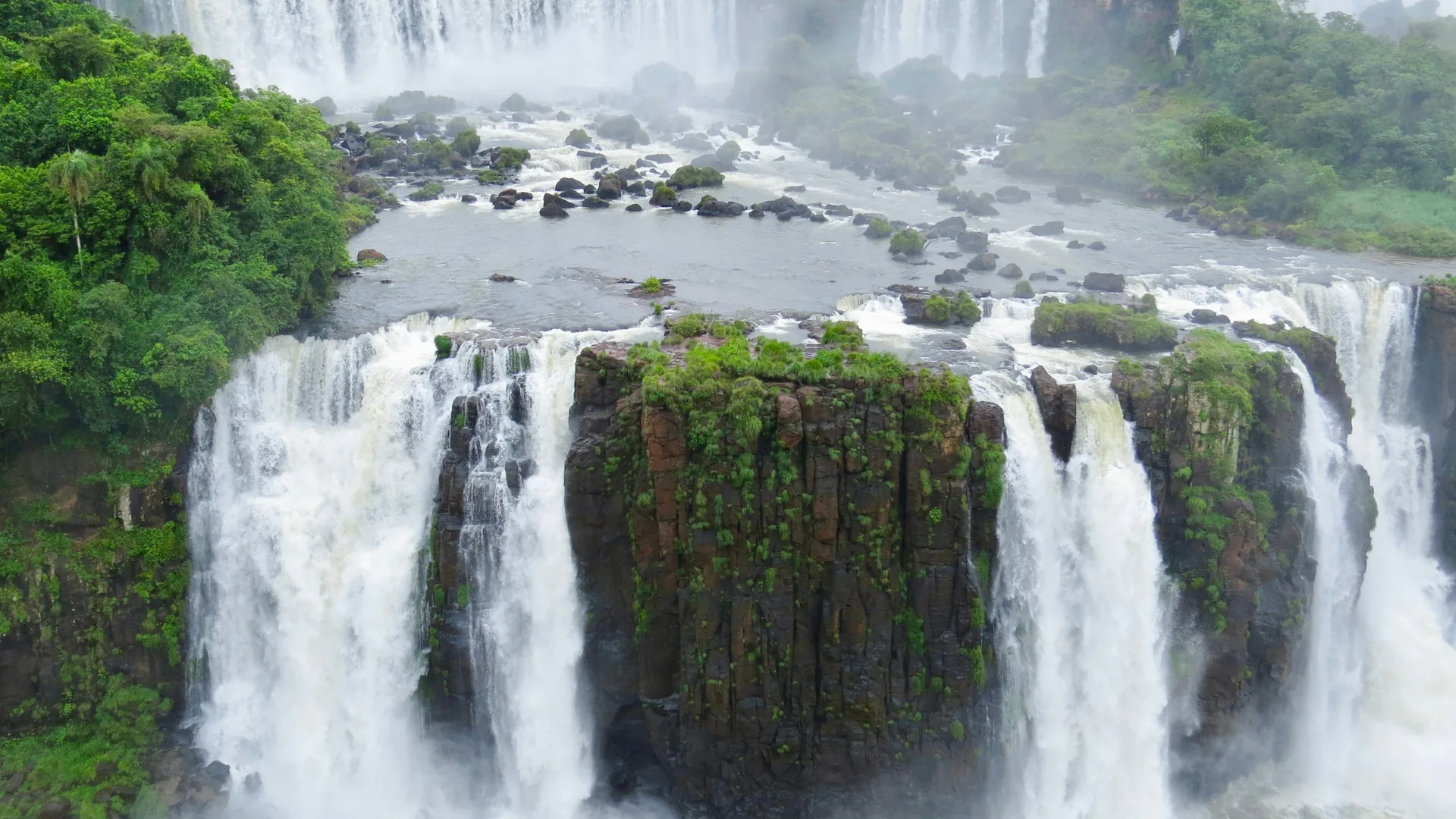
Plan your visit to Iguazú Falls
Argentine side vs Brazilian side
The two countries share the falls and each offers a different experience. The Argentine side (Puerto Iguazú) is the immersive one: several kilometres of trails and steel catwalks take you among and above the cataracts, plus the train to the Devil's Throat — plan a full day. The Brazilian side (Foz do Iguaçu) is the panorama: a shorter trail delivers the wide, postcard view of the whole falls in about half a day. With time for both, most visitors do Argentina first, then Brazil.
The Devil's Throat (Garganta del Diablo)
The highlight is the Devil's Throat, a U-shaped chasm where the largest volume of water plunges in a permanent roar of spray. On the Argentine side you reach it via the Ecological Train to the Garganta station, then a 1,100-metre catwalk across the upper river to a platform right at the lip. Expect to get wet — and to see rainbows on a sunny day.
Best time to visit
The falls flow year-round. The subtropical summer (Dec–Feb) is hot, humid and busy with the highest water; spring and autumn (Sep–Nov, Mar–May) are more comfortable with good flow. Arrive at park opening to walk the catwalks before the tour groups and the midday heat; rainbows are strongest mid-morning to early afternoon.
Getting there & crossing the border
The Argentine park is reached from Puerto Iguazú, the Brazilian park from Foz do Iguaçu, about 30–40 minutes apart across the international bridge. Doing both sides means a border crossing, so carry your passport. Guided tours and transfers handle the logistics and queues; park entry fees are typically paid on-site in local currency unless your tour includes them.
Iguazú Falls opening hours
| Argentine park (Parque Nacional Iguazú) | Daily, roughly 08:00–18:00, with last entry in the late afternoon |
|---|---|
| Ecological Jungle Train (Argentine side) | Runs through the day to the Devil's Throat station; first departures from around park opening |
| Brazilian park (Parque Nacional do Iguaçu) | Daily, roughly 09:00–17:00, with the ticket office closing earlier |
| Devil's Throat catwalk | Open with the park, but can close temporarily after heavy rain raises the river |
Both parks adjust their exact hours by season and can shorten access after floods, so treat these as a guide and reconfirm on the day. Arriving at opening gives you the quietest catwalks and the best light for the morning rainbows.
Frequently asked questions
Which side is better — Argentina or Brazil?
Argentina for the immersive trails, catwalks and the Devil's Throat (a full day); Brazil for the sweeping panoramic view (about half a day). If you only have one day, most people choose the Argentine side.
How long do I need?
A full day for the Argentine side and roughly half a day for the Brazilian side. Two days lets you do both at a relaxed pace.
What is the best time of year to visit Iguazú Falls?
The falls run all year, so there is no bad time — only trade-offs. Spring and autumn (September–November and March–May) give the best balance of comfortable weather, strong flow and lighter crowds. Summer (December–February) has the highest water but is hot, humid and busy; winter (June–August) is mild, quiet and still spectacular. Whenever you come, arrive at opening for the calmest catwalks.
What is the Devil's Throat?
The Garganta del Diablo is the largest and most dramatic of the falls — a horseshoe chasm reached on the Argentine side by the park train and a long catwalk over the river to a viewing platform at the edge.
How do I get to Iguazú Falls from Buenos Aires?
The quickest way is a short flight — under two hours from Buenos Aires to Puerto Iguazú airport (IGR), the town beside the Argentine park. From the airport or town it's about 20 minutes to the park gate. There are also long-distance overnight buses if you prefer to travel by road. The Brazilian park is reached from Foz do Iguaçu, served by flights from São Paulo and Rio.
Do I need my passport?
Yes if you visit both sides, since the two parks are in different countries and require crossing the international bridge between Puerto Iguazú and Foz do Iguaçu.
Is park entry included?
It depends on the tour — many guided options include transfers and a guide, while national-park entry is sometimes paid separately on-site in local currency. The inclusions for each option are shown at checkout.
Can I get close to the water?
Yes — the catwalks bring you right alongside and above the cataracts, and optional boat rides take you into the spray beneath the falls. Bring a rain layer and protect your phone or camera.