Tickets, hours and the 2026 closure
Iguazú Falls tickets for both sides
Separate tickets for each side, what the train and park bus include, opening hours, the 2026 Devil's Throat closure and what the guided tour covers.
Book your Iguazú Falls tour ↗Quick answer
You need a separate ticket for each side. On the Argentine side, buy online up to 30 days ahead or pay at the park box office in pesos, and the jungle train is included. The Brazilian side sells tickets only online, for a set day and entry time. The guided tour from Puerto Iguazú adds hotel pickup and a guide, but park entry is paid on site. And this season, the Argentine Devil's Throat walkway has been closed since 3 August 2026.
The two park tickets compared
| Argentine side | Brazilian side | |
|---|---|---|
| Gateway town | Puerto Iguazú | Foz do Iguaçu |
| Where to buy | Online, or box office | Online only |
| Date and time | Fixed, no changes | Fixed, changeable online |
| Getting around inside | Jungle train, included | Park bus, included |
| Entry hours | 8:00 to 16:00 | 9:00 (weekends 8:30) to 16:00 |
| Devil's Throat walkway | Closed since 3 Aug 2026 | Open, shuts at high water |
| Time needed | Most of a day | About two hours |
Two parks, two tickets
The falls run along the border between Argentina and Brazil, and each country protects its share in its own national park: Parque Nacional Iguazú in Argentina and Parque Nacional do Iguaçu in Brazil. Each park sells its own entry, and neither ticket gets you into the other. Almost 80% of the falls are on the Argentine side, where trails run above and below them. Brazil holds just over 20%, but its trail gives the wide, panoramic view. Buy only from the official sites: the national parks system (APN) or iguazuargentina.com for Argentina, and cataratasdoiguacu.com.br for Brazil.
How Argentine side tickets work
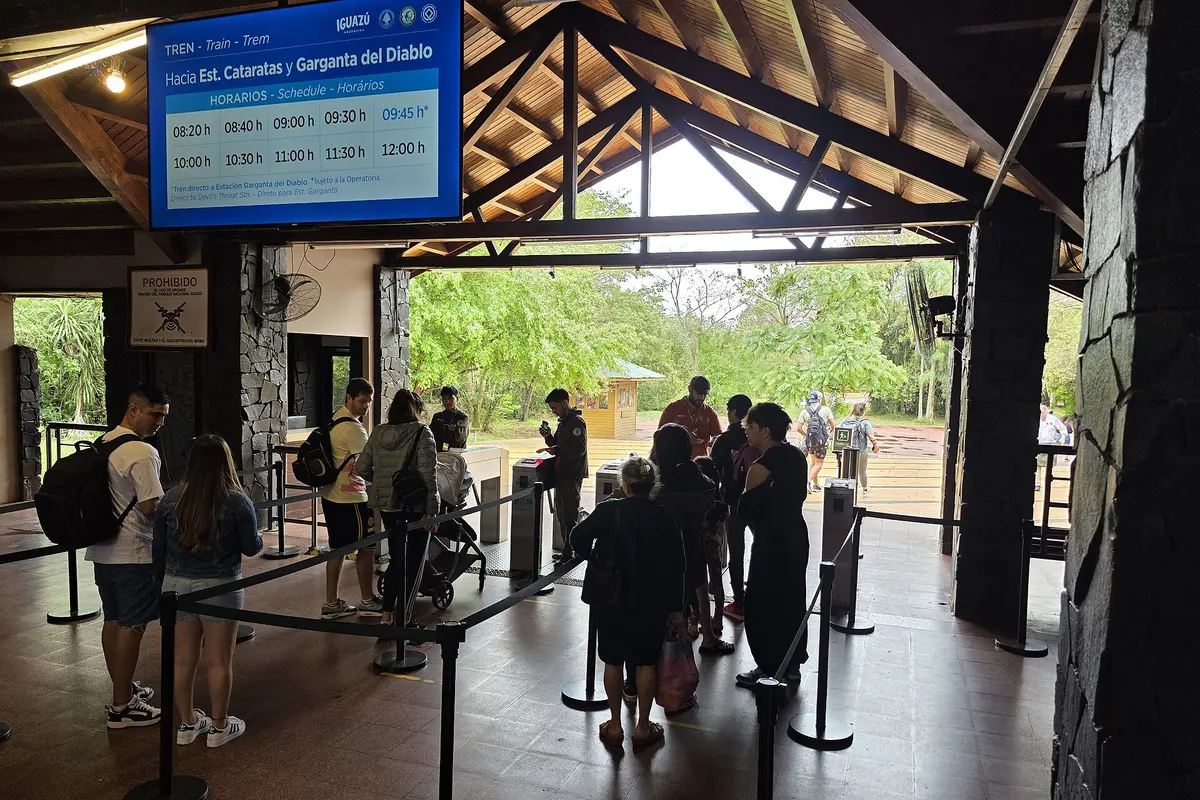
Buy online through the national parks system, or at the park box office in pesos, by card or cash. The park recommends online, to skip the queue. Tickets go on sale 30 days before the date you choose. Entry covers every circuit and trail open that day, plus the Ecological Jungle Train. The ticket is valid only for the day and time you pick, and it can't be changed once bought. If something outside your control stops you going, it stays valid for up to 72 hours. At the box office you show your passport or ID so staff can set your visitor category.
- Children under 6 enter free
- A second day costs half, if you show your first day's ticket at the box office
- Train tickets are free: pick one up at the ticket points inside the park
How Brazilian side tickets work
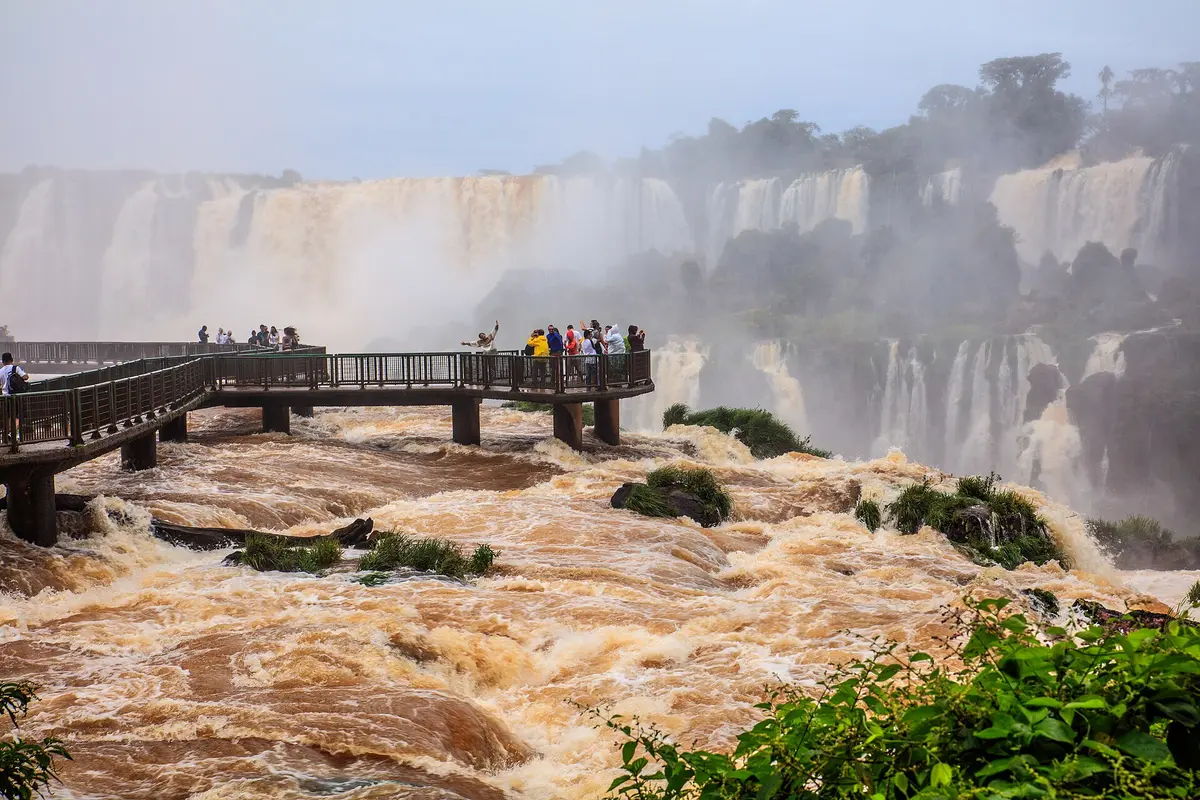
Brazil's tickets are limited and sold only online, at cataratasdoiguacu.com.br, for a set day and entry time. The time is when you go in, not when you must leave, and you can stay until the park closes at 17:30. To change the day or time, log in to the account you bought with. The ticket includes the park bus, about 12 km there and back between the visitor centre and the Cataratas Trail, as private cars can't drive into the park. It also covers the trail, lifts, walkway and viewpoints. Children up to 6 enter free. Every visitor shows photo ID with their ticket.
Opening hours and the jungle train
The Argentine falls area opens every day of the year from 8:00 to 18:00, including holidays and rainy days. Last entry is 16:00, and the circuits close at 16:45. In high season and on some long holiday weekends it opens at 7:00. The first train leaves Central Station at 8:20, then 8:40 and 9:00, and every 30 minutes after that, or every 15 in high season. The last train out leaves at 15:30, and the last train back from Garganta station is 17:30. In Brazil, the park also opens daily: entry runs from 9:00 to 16:00 on weekdays and from 8:30 at weekends.
Read next: Best Time to Visit Iguazú Falls
The Devil's Throat in 2026
On the Argentine side, the Devil's Throat circuit is closed. From 3 August 2026, teams began lifting the walkway's floors and railings, a 40-day job, because El Niño forecasts pointed to very high river levels in September and October. There is no reopening date. The Upper and Lower Circuits, the Macuco and Verde trails, the visitor centre and Territorio Yaguareté stay open. In Brazil, the walkway to the Devil's Throat viewpoint is open but closes when the river runs high. It shut from 11 to 14 September 2026 and reopened on 15 September. Check both parks' sites the day before you go.
Which side, if you only have one day
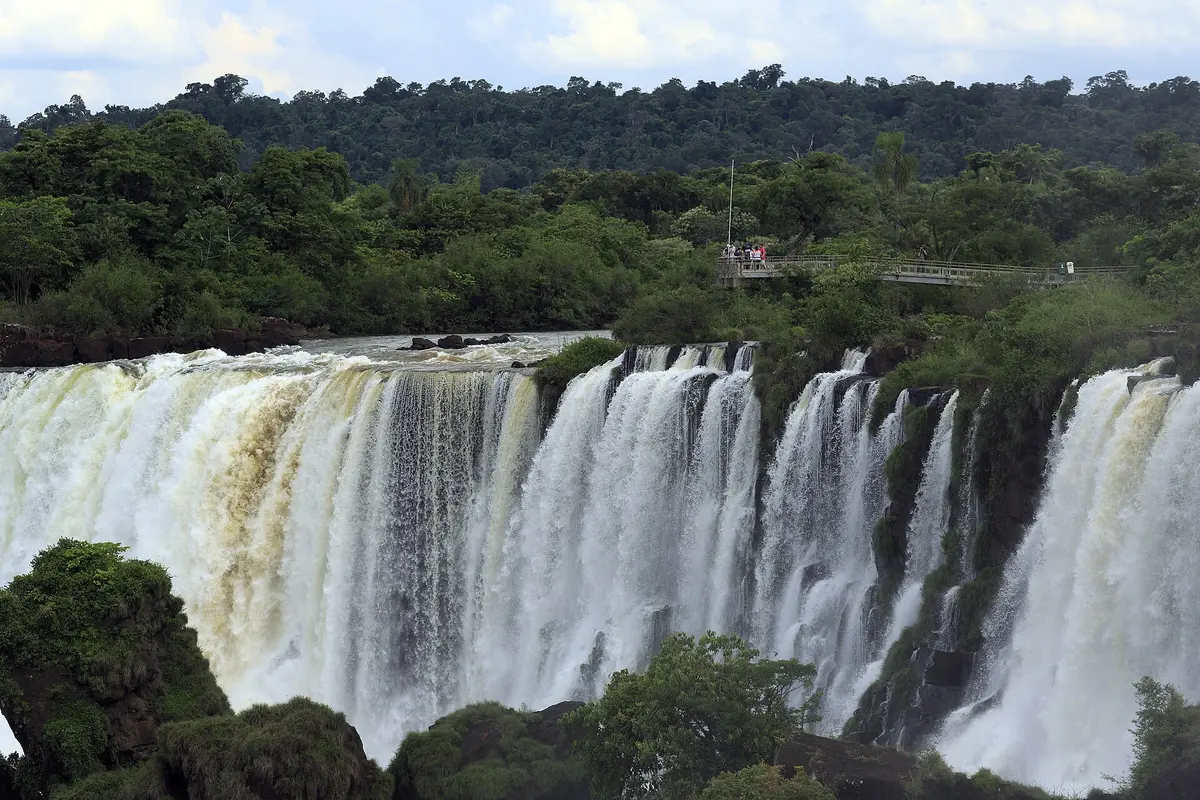
Argentina gives you more hours beside the water. The Upper Circuit runs about 1,850 m along the top of the falls, takes around 90 minutes and is fully wheelchair accessible. The Lower Circuit, about 1,450 m and also around 90 minutes, has steep stairs in places and brings you very close to the falls. Brazil's classic visit takes about two hours: one trail facing the falls, ending on the walkway near the Devil's Throat. The Devil's Throat canyon is 80 to 90 m wide and 70 to 80 m deep. While the Argentine walkway stays shut, the Brazilian one is your way to see it up close.
What the guided tour from Puerto Iguazú covers
The tour we link to is a guided day on the Argentine side, run by Tangol. It lasts 8 to 9 hours, with a live guide in Spanish and English, and pickup and drop-off at selected hotels in Puerto Iguazú. The usual route takes the train to Garganta station for the Devil's Throat, then the Upper and Lower paths, with a break for lunch at a park restaurant. While the Devil's Throat circuit is closed, the itinerary changes. Park entry isn't included: you pay it on site before going in. Free cancellation is available up to 24 hours before.
- Included: bilingual guide, hotel pickup and drop-off in Puerto Iguazú
- Not included: national park entrance fee, meals
- Bring your passport or ID card; a copy is accepted
- Not suitable for wheelchair users
Going on your own instead
You don't need a tour to visit either side. The Argentine park entrance is on Ruta Nacional 101 at km 142, and Río Uruguay buses run there from the Puerto Iguazú bus terminal every 20 minutes. Professional guides can also be hired at the park entrance. On the Brazilian side, city bus 120, Parque Nacional–Aeroporto, runs from the Terminal de Transporte Urbano in Foz do Iguaçu to the visitor centre, and back. Going alone, you set your own pace. The tour's value is hotel pickup and a guide who knows the circuits.
Read next: Getting to and Around Iguazú
Doing both sides and crossing the border
Puerto Iguazú and Foz do Iguaçu are linked by the Tancredo Neves Bridge, which crosses the Iguazú River. Seeing both parks means leaving one country and entering the other, so carry your passport and check the entry rules for both countries for your nationality before you travel. Buy each park's ticket separately, as they're separate systems. The Argentine half-price second day applies only in Argentina. Brazil offers its own 2- and 3-day passes, with dates you choose at purchase and can change twice before first use. Boat trips under the falls are separate tickets again, sold by the boat operators.
What to bring and park rules
The Argentine park's own tips are about heat, sun and rain. Rain doesn't close the circuits, though some trails can shut for safety, so check their status when you arrive. Never touch or feed the animals. Pets aren't allowed in either park. Lockers are available at both entrances, and free wheelchairs at the Argentine train stations and the Brazilian visitor centre.
- Light clothes and comfortable walking shoes
- A cap, sunglasses and a raincoat (sold in park shops too)
- Water, sunscreen and insect repellent
- Your passport or ID for the box office or ticket check
Who this isn't for
If you're staying in Foz do Iguaçu, this tour won't work, because pickup is from hotels in Puerto Iguazú and it covers only the Argentine side. Wheelchair users are better off visiting independently: the tour isn't suitable, but the park's main circuits and train are accessible. If the Devil's Throat walkway is your main reason to go, check its status first, as it's closed with no reopening date. And if you'd rather wander at your own pace until closing, the bus and a ticket bought online give you that.
Frequently asked questions
Do I need to book Iguazú Falls tickets in advance?
For Brazil, yes: tickets are limited and sold only online for a set day and entry time. For Argentina, you can pay at the box office in pesos, but the park recommends buying online to skip the queue. Argentine tickets go on sale 30 days ahead.
Does one ticket cover both sides of the falls?
No. Each country's national park sells its own ticket, and neither gets you into the other park. Buy the Argentine ticket through the national parks system or iguazuargentina.com, and the Brazilian one at cataratasdoiguacu.com.br.
Is park entry included in the guided tour?
No. The tour includes a bilingual guide and hotel pickup and drop-off in Puerto Iguazú, but the national park entrance fee is paid on site before entry. Lunch isn't included either.
Is the Devil's Throat open?
Not on the Argentine side: its walkway has been closed since 3 August 2026, with no reopening date. On the Brazilian side, the walkway to the Devil's Throat viewpoint is open but closes when the river runs high, as it did from 11 to 14 September 2026.
What time does the Argentine park open?
Every day from 8:00 to 18:00, including holidays. Last entry is 16:00 and the circuits close at 16:45. The first train leaves at 8:20 and the last one out at 15:30.
How long do I need at each side?
Allow most of a day for Argentina: the Upper and Lower Circuits take around 90 minutes each, plus the train and breaks, and the guided tour lasts 8 to 9 hours. The classic visit on the Brazilian side takes about two hours.
Sources
- Comprá tus entradas (Iguazú Argentina, park concessionaire)
- Horarios y consejos (Iguazú Argentina)
- Preguntas frecuentes (Iguazú Argentina)
- Devil's Throat circuit closure, 3 August 2026 (Iguazú Argentina)
- Informações gerais (Parque Nacional do Iguaçu, Urbia Cataratas)
- Informações sobre ingresso (Parque Nacional do Iguaçu)
- Walkway reopens on 15 September 2026 (Parque Nacional do Iguaçu)
- Iguazu Falls (Wikipedia)